
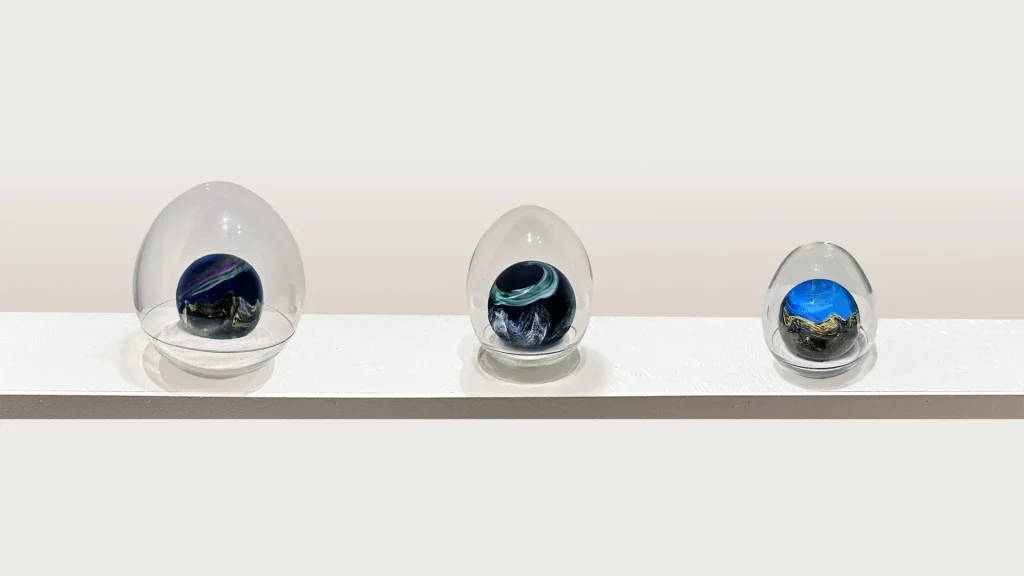
It is easy to see what is lost when bodies are challenged by chronic pain, mobility issues, and medical impairment. They are the visible and outwardly acknowledged aspects of the term “disability” and define the things the medical model of disability sees as in need of treatment and if possible, to be cured (Mykitiuk, Chaplick and Rice 1). What is less obvious is what can be gained; what is afforded to those in non-normative bodies by way of these same experiences. This group of pieces is called “The Before.” The Before refers to my life before the amputation of my left foot. It was years defined by the intense pain of Complex Regional Pain Syndrome that had collapsed my world like a black hole. It was years when my primary source of human interaction was as a patient, a medicalized object. I seldom left my home for anything other than medical appointments or absolute necessity; I didn’t have the capacity to read or watch movies so even characters were outside of my aloneness. I sat at my window and watched the New Mexico sky, the birds, the seasons, the mountains. In the Before, pain stretched moments into eternities, and I looked to the mountains for their understanding of geologic time. I watched the slow changes in the earth outside my window, a canyon full of Juniper trees and prickly pear cactus. I watched day by day as the wind and the animals and the occasional desert mountain rains left their marks, moved the sand and soil almost imperceptibly. Or perhaps it wasn’t that it was imperceptible, but that the changes only bore noticing when I sat so still and looked for so long. Pain and immobility afforded me a relationship with geologic time, a capacity for seeing kinds of beauty that require extended stillness. The Before series renders in glass the appreciation for these landscapes that sustained me while I was isolated, immobile, and in pain.
This series began as an exploration of my relationship with the landscapes of places that have held me in times of restricted mobility. Each landscape orb is created through a process of building layers of coloured molten glass, applied almost like paint, pushed and pulled into earth and sky. Each orb is contained, inverting the relationship of landscape to my existence when I was limited to looking out through my window at the world, watching the slow changes of land, seasons, erosion, and growth. The vessel of containment is shaped like an egg, marking it as a liminal space/time. The patience and stillness required of watching the world becoming was an experience afforded to me by pain-limited mobility. It is an experience and embodied knowledge that I would not give up in trade for a normative existence. Rendering this liminal stillness in molten glass—elemental earth and fire turned in my hands shielded by water, shaped by my breath—returns my core to the experience of knowing geologic time, of being small and temporary and filled with gratitude.
Newer landscape pieces exist uncontained, as I am no longer an isolated observer, but moving among these places. In my recent travels I have fallen in love with the landscapes of my new home near the Canadian Rockies. Equally, I have fallen deeply for the skies here–brilliant sunsets, ever-changing clouds, and the chase of the aurora. Each of these orbs captures a single, precious, transient moment of light.
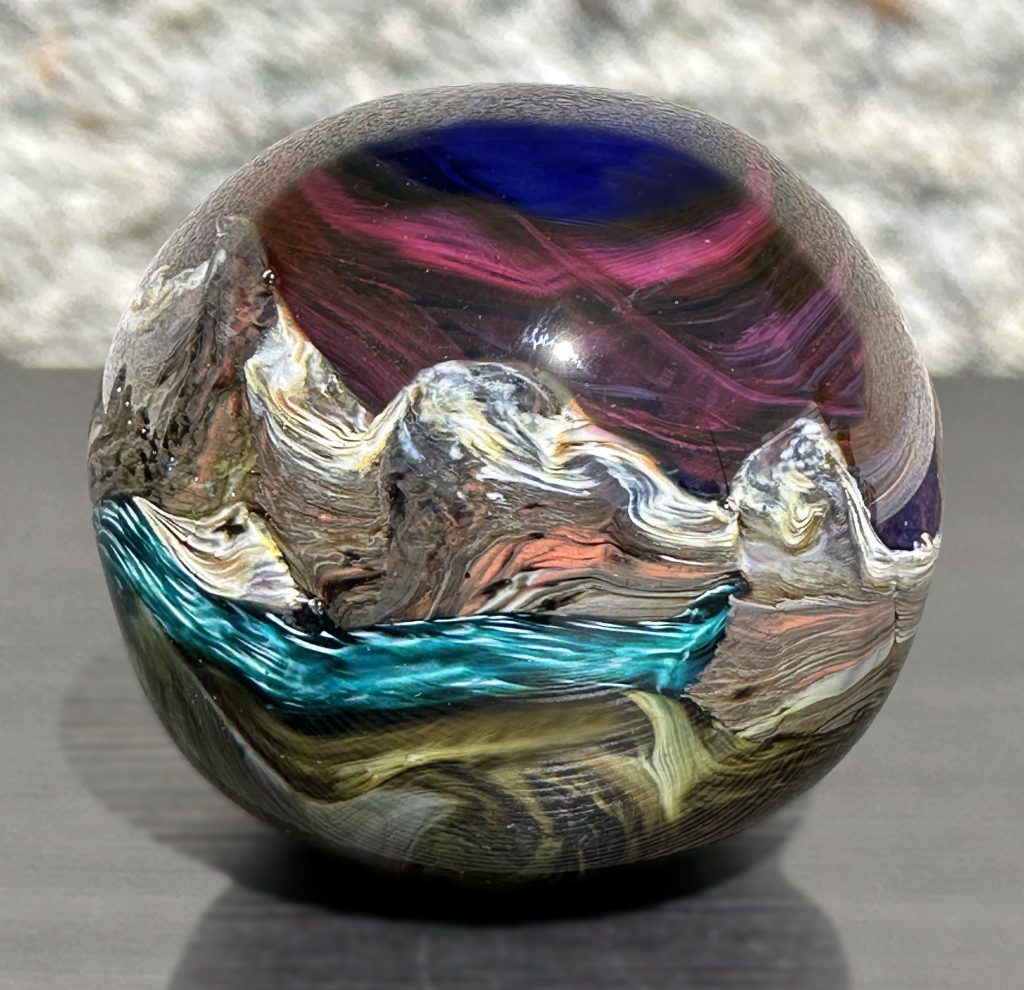
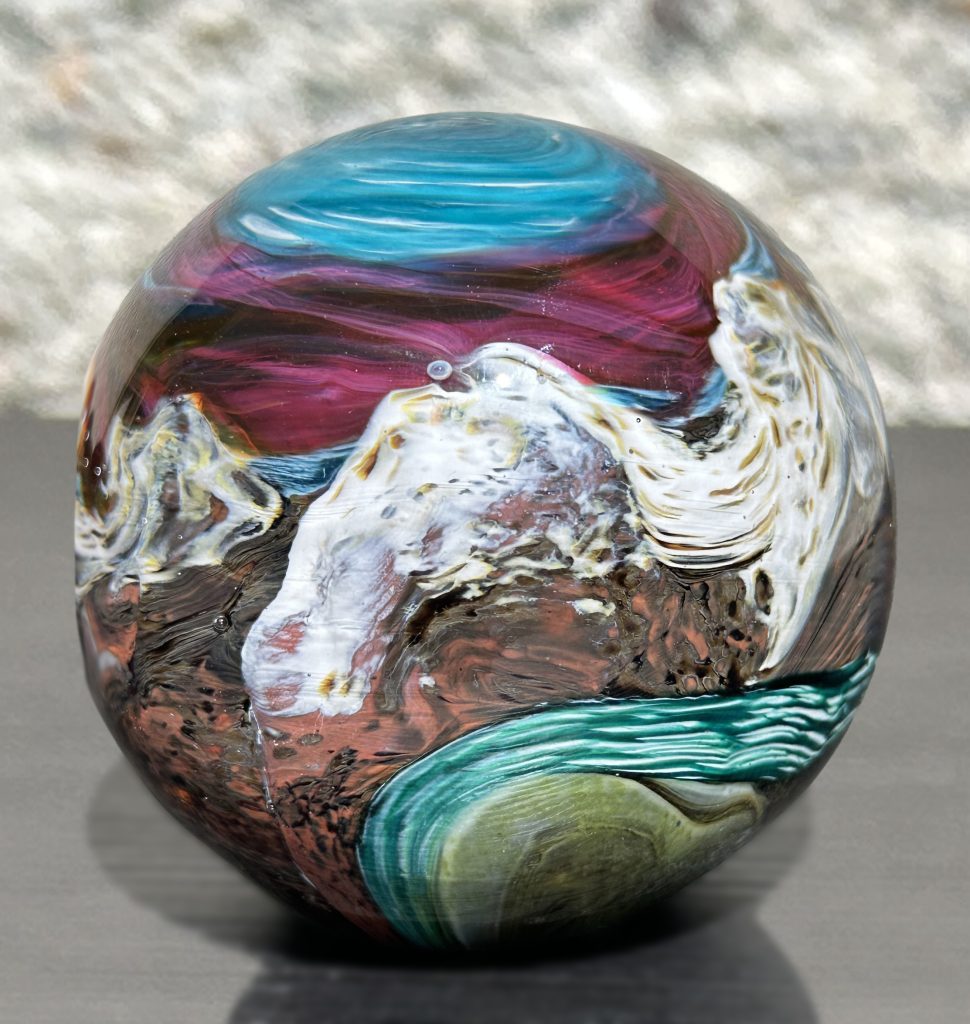
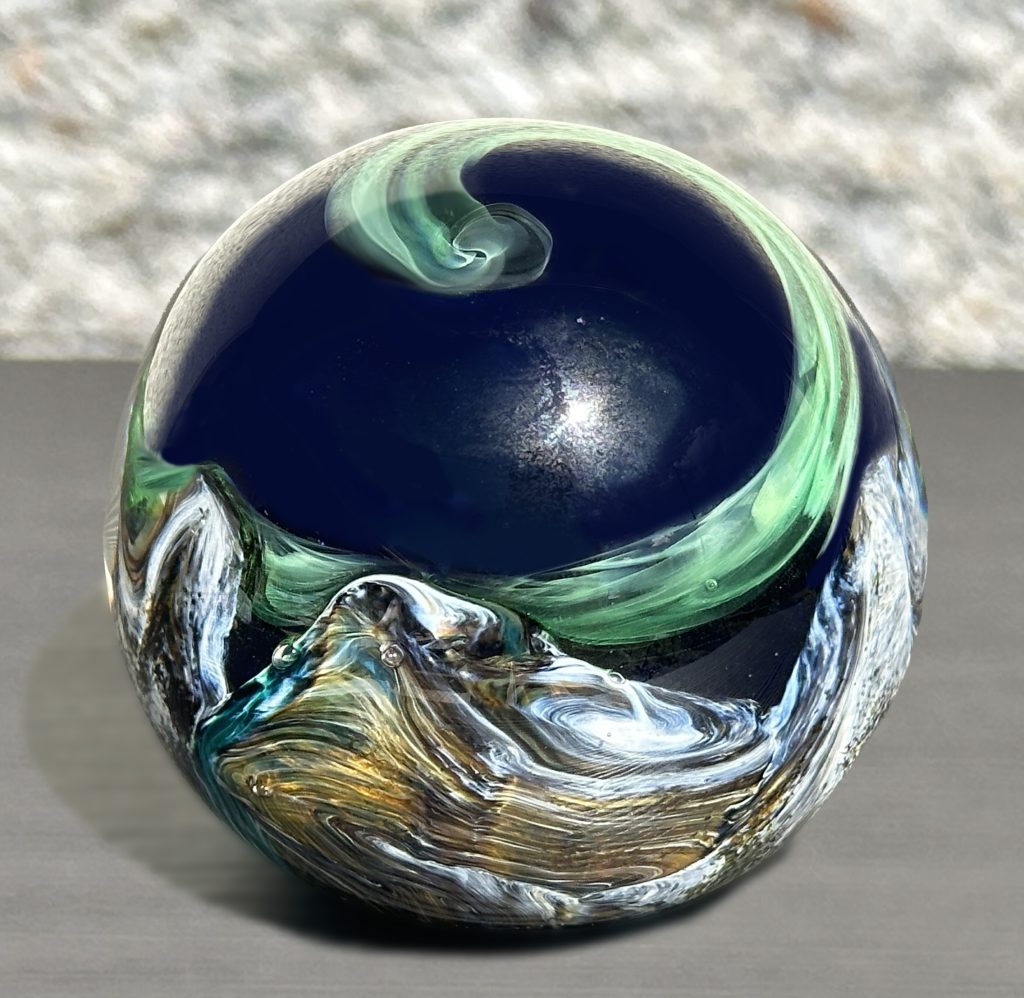
My amputation freed me from the pain and gave me back freedom of movement. I came back to life with fervor and joy and energy. Within a few weeks of surgery I went swimming in waterfalls and surfing and skydiving and traveled and fell in love and within four months I started graduate school. I could credit the intensity of a 20 month Masters program for the pace I have since kept, but the reality is that after years of being unable to move without pain, the very idea of slowing down can trigger a fear of loss, of a return to that captive life. Even as I continue to produce glass landscapes that draw on my memory of the mountain stillness that sustained me, I find it hard to quiet the urge to always keep moving.
During the last five months of my degree, the pace caught up with me. I kept getting sick, but with deadlines looming ahead of me I pushed through, until reaching the end of the program. It feels a bit like being at the edge of a cliff, suddenly. My body needs rest, stillness, time to be quiet. So now I am on a quest of finding balance, of building a world and a life for myself that takes full advantage of my ability to be in motion once more without running myself into the ground.