
Into the Light
2025
During my MFA at Alberta University of the Arts I began to explore the medium of film. In the years prior to my amputation, my mobility had been severely limited by pain. Movement existed in my daydreams. I imagined what I would make when I could return to the studio, and everything I saw in my mind was glass in motion. A soaring glass phoenix, a glass marionette, entire worlds and stories dancing with light. Glass is not a medium that inherently lends itself to being in motion, but as I made my return to the studio I couldn’t shake the need to incorporate movement into my glass works.
The idea for the first film project came to me when I toured AUArts as a prospective student and saw a kids animation summer camp taking place in the media arts lab. They were creating stop motion films with puppets. In that moment, I knew that I wanted to create a marionette to tell the origin of my phoenix, a self portrait in glass. Creating the puppet was only the beginning, though, I imagined her in motion, and realized that the best way to tell her story was through film. When I enrolled in the MFA program, I realized that the hotshop was closed for the summer term and that that provided the perfect opportunity to expand my skills into film making.
I spent the first two semesters meeting with film faculty, making story boards, writing a script, and developing my glass sculpting skills and studying puppet construction. I made a clear glass version of the marionette as I worked out the scale. I researched artists who create human portraits in glass to learn about creating realistic color. I studied the work of John Moran, and adapted what I could glean of his methods using layers of coloured glass powders to create a marionette in full colour.
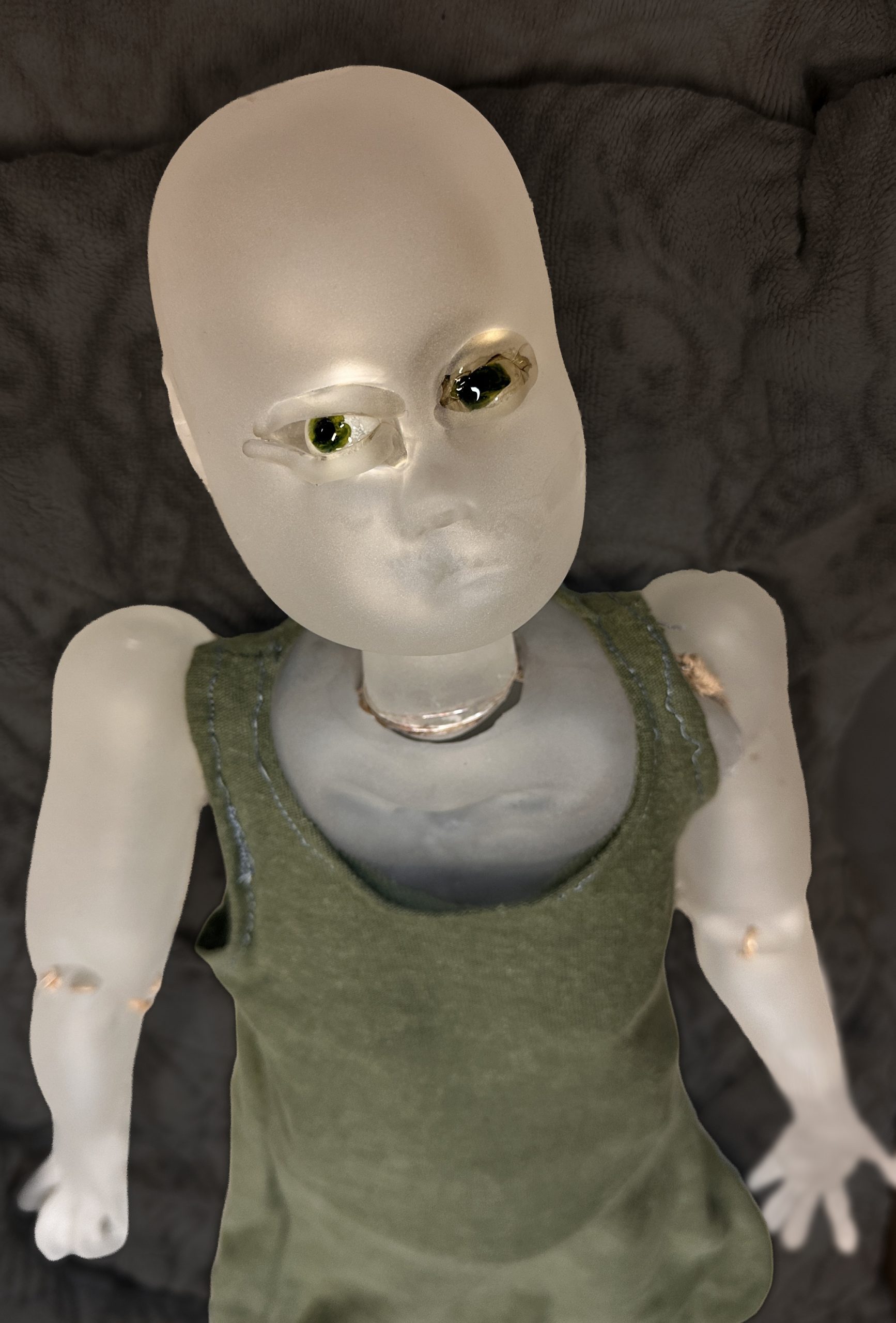
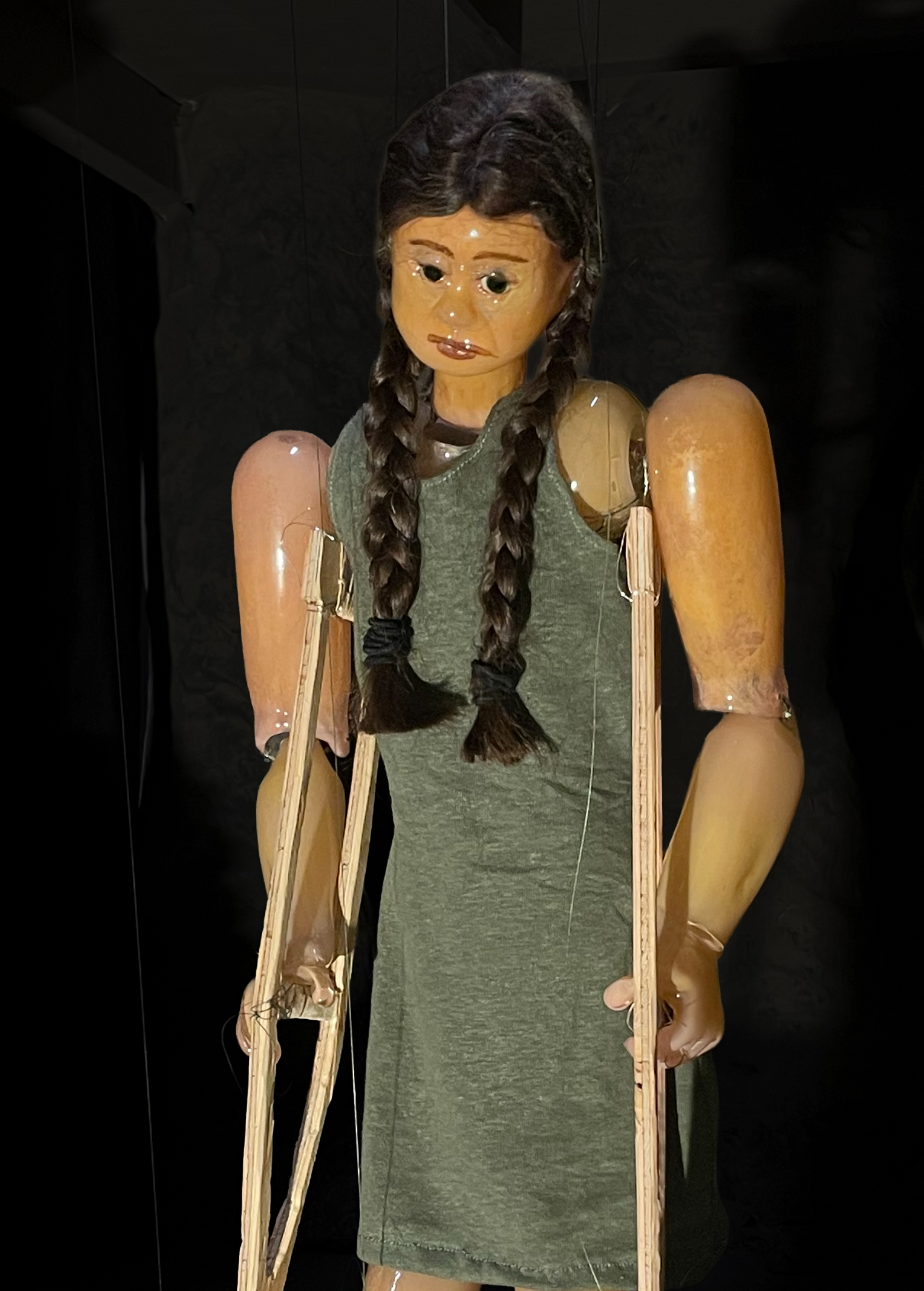
“Into the Light” is the culminating self-portrait glass marionette film project. The film takes on pieces of Plato’s Allegory of the Cave. It opens in a dark cave, the transparent marionette slumped against a wall, the rise and fall of her breath the only indication of life. Eventually she stands up and begins to walk, following shadows that speak of a greater truth and possibility of life outside of her cave. In Plato’s allegory, Socrates states “Someone’s vision can be impaired for two reasons. The first is when someone comes out of the light and goes into the dark, and the second is when one comes out of the dark and goes into the light” (Plato 4). At the opening of the film, the marionette could be described as the first—paralyzed by life in the darkness of pain, she becomes animated and motivated by memory of life in the light. She proceeds to observe and follow the shadows she knows lead to the source of light, and a possible future without pain.
I felt a bit as if I embodied the second after the film was complete, when I faced a significant medical setback after rushing blindly into the light of post-amputation life. The setback took me entirely by surprise as though I was so blinded by the light that I forgot even the possibility of darkness. Darkness and light tell different stories of the same objects—even when I (or my puppet proxy) am the object.
The strings of the marionette represent the various forces that pulled on my body as I moved through my experience with Complex Regional Pain Syndrome in the US healthcare system–doctors, physical therapists, insurance companies, schedulers, etc.. Ostensibly moving me towards the same goal of returning to health, while often requiring me to fight for bodily autonomy.
The film opens with a ghostly version of the puppet in a dark cave. Isolated and in pain, she is barely there–still breathing but hardly alive. Exhausted and trapped in a body that neither allows her to do much of anything nor surrenders to sleep and a realm of dreams, time seems unmoving. When time would stop for me, I reached for memory as proof that time was still moving, that no matter how excruciating a moment was it was also temporary. The words puppet hears pull her back, and she opens her eyes to see shadows moving on the cave wall from a magically illuminated vase projecting a possible future without a foot, without the pain that is her prison. Puppet begins to hope, color returns to her skin, and she pushes forward towards possibility. Another vase alights, leading her through the cave as shadows show improving mobility ahead of her. Movement is a struggle, but she smiles as she watches projections of what could be her future. CRPS caused my left foot to be completely heat intolerant, making even a luke warm shower feel like standing in lave. Between this, and my chosen medium of hot glass, it felt most appropriate for molten lava to be the catalyst for puppet’s transformation from a body in pain into a soaring phoenix. The film currently concludes with her stepping into lava, as she steps into liquid light and is transformed.
Future versions may include the phoenix rising from the flame, but the intent is for this to be displayed beneath the fully embodied glass phoenix in a scrying bowl–another reference to the convolutions of time experienced by bodies in pain, as it is both past and future, my phoenix origin and hope foretold, a looping reminder that time is always moving and we always have the chance and the choice to walk into the light.
. .
Adapt
2026
In September 2025 I was suddenly unable to wear my prosthetic due to a concerning onset of new symptoms. The setback took me entirely by surprise as though I was so blinded by the light of post-amputation life that I forgot even the possibility of darkness. That moment of relearning darkness became the impetus for creating a glass blowing wheelchair so that I could continue to pursue my work in the hotshop. I also had to find a way to adapt the loom I was weaving my phoenix fabric. As it became clear that my MFA research was as much about making and adapting tools as it was making work with them, I had to find a way to document them. I regularly take process videos for my own benefit, to be able to go back and refine or duplicate things that happen in the studio, so it wasn’t much of a leap to imagine this as the beginning of a documentary film about my studio work, with a particular focus on adaptive technology. This became the basis for the three films projected in my solo show “Adapt” in the Marion Nicoll Gallery, MArch 27-April 20, 2026. In the gallery, each film was projected on the wall behind the physical adaptive tools, allowing visitors to engage with the objects themselves and understand what it looks like to live an adaptive life.